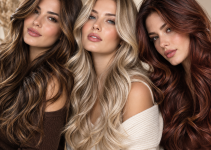
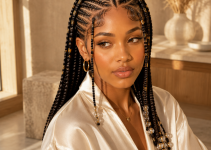
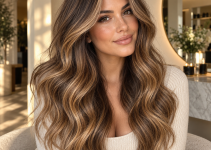
Chestnut brown hair is one of the most captivating choices for anyone who wants a brunette transformation that feels warm, sophisticated, and beautifully natural. Unlike ordinary brown hair, which can sometimes appear flat or overly dark, chestnut brown brings together earthy brunette depth, delicate reddish undertones, and subtle golden reflections. The result is a multidimensional color that changes gently under different lighting conditions, making even a simple hairstyle look remarkably polished. 🤎
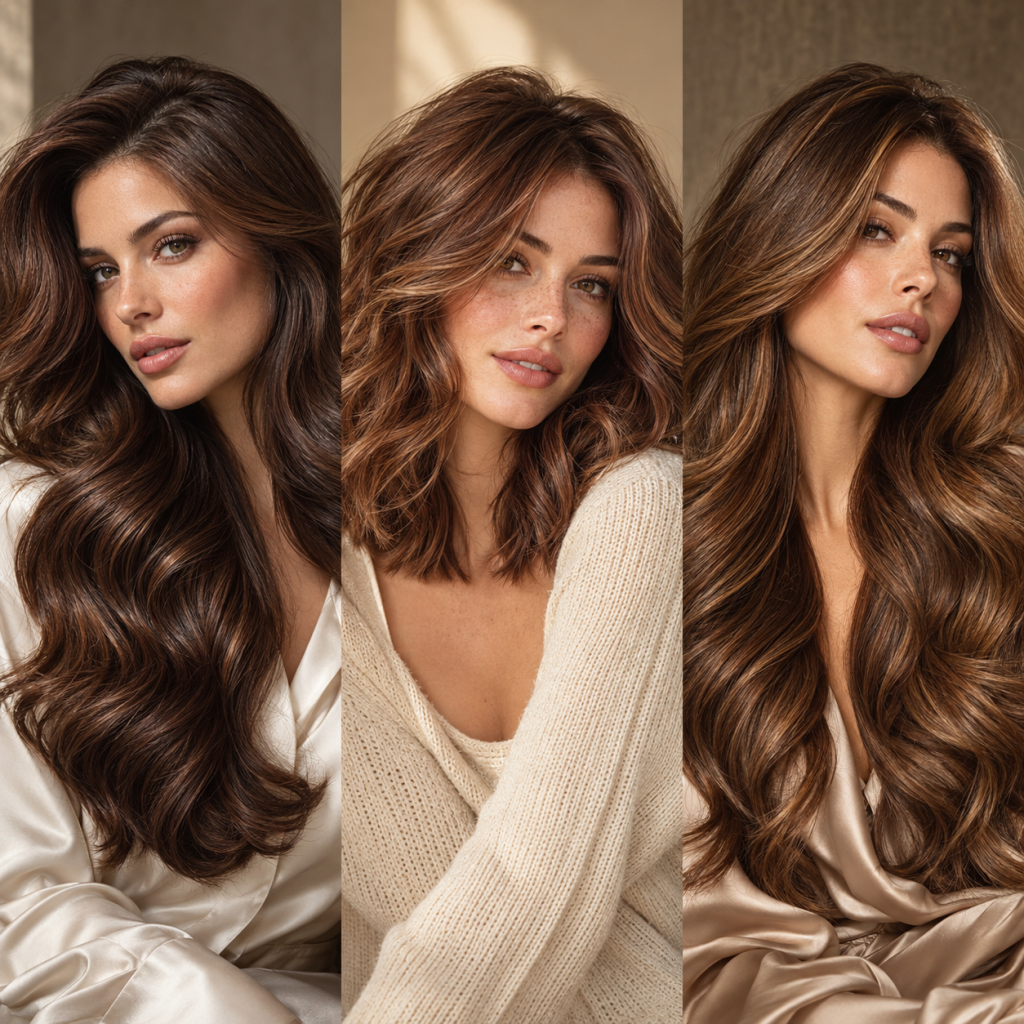
There is something irresistibly elegant about chestnut brown. It does not depend on dramatic blonde highlights, bold fashion colors, or high-contrast techniques to attract attention. Instead, its beauty comes from the delicate balance between rich brown pigments and naturally glowing warmth. Under soft indoor lighting, chestnut hair may appear like a deep, refined brunette. When sunlight touches the strands, hidden notes of toasted amber, warm cinnamon, and soft reddish brown become visible.
This exceptional versatility makes chestnut brown particularly appealing for people who want noticeable beauty without an artificial-looking transformation. It can feel romantic on long flowing hair, modern on a precision bob, and effortlessly sophisticated on naturally textured curls.
However, not every chestnut brown shade creates the same impression.
Some interpretations are dark and mysterious, relying on subtle mahogany undertones to create a luxurious brunette appearance. Others celebrate luminous copper warmth without crossing into traditional auburn territory. A third approach introduces softly illuminated amber sections that resemble the natural color variation found in polished chestnut wood.
The most exciting results often come from understanding these distinctions rather than simply requesting a generic medium brown color.
These Top 3 Chestnut Brown Hair Ideas explore three distinctive color directions that emphasize natural chestnut pigmentation, harmonious tonal transitions, and sophisticated styling possibilities.
From deep woodland elegance to soft cinnamon warmth and luminous amber reflections, each approach offers a different way to make chestnut brown hair feel uniquely beautiful.
Why Chestnut Brown Hair Is Such a Beautiful Choice for a Natural Brunette Transformation
The appeal of chestnut brown hair begins with its complex relationship between warm and neutral tones.
Many traditional brown hair colors lean strongly toward one direction. Ash brown emphasizes cool, muted pigments, while golden brown creates noticeably yellow or honey-colored warmth. Deep espresso brown focuses on darkness and richness, often with limited visible red reflection.
Chestnut brown occupies a different position within the brunette family.
Its recognizable character comes from the combination of a brown foundation and subtle reddish warmth. Depending on the formulation, the finished shade may include traces of copper, mahogany, amber, or cinnamon without becoming an obviously red hairstyle.
This distinction makes chestnut brown especially interesting for people who appreciate warm hair colors but do not necessarily want vivid copper or intense auburn.
What Makes Chestnut Brown Hair Different From Other Brown Hair Colors
The easiest way to recognize true chestnut brown is to look for reddish warmth that remains integrated into an unmistakably brunette base.
Rather than creating separate sections of dramatically different colors, chestnut brown usually presents itself as a harmonious overall shade. Variations in tone may become noticeable when the hair moves or when natural light reflects across the surface.
For example, a deeper chestnut shade can appear medium-dark brown in a shaded room. Near a sunlit window, the same hair may reveal a delicate red-brown glow.
A lighter interpretation may appear warm medium brown indoors while producing subtle amber reflections outdoors.
These natural-looking changes are part of what gives chestnut brown its distinctive personality.
The shade also works beautifully with different haircut structures. Sleek styles emphasize its polished surface, while curls and layered cuts reveal the gentle differences between darker and lighter sections.
✨ The defining characteristic is balance. Chestnut should look warmly brunette rather than strongly copper, burgundy, or blonde.
Why Chestnut Brown Hair Can Look Especially Luxurious
A beautiful chestnut color does not need excessive contrast to create visual interest.
Its luxurious appearance often comes from smooth tonal continuity. When the root area, mid-lengths, and ends maintain related brunette shades, the finished color looks cohesive rather than fragmented.
Gloss plays an equally important role.
A reflective hair surface allows different pigments to catch the light, revealing reddish and golden nuances that might otherwise remain hidden.
This is particularly noticeable in softly waved hair. As each curved section reflects light from a slightly different angle, the chestnut undertones become more visible.
The effect can make the hair appear richly colored without relying on conspicuous highlights.
Chestnut brown also offers considerable flexibility across seasons. Its earthy warmth complements autumn-inspired wardrobes, yet it can feel equally appealing during spring and summer when paired with lighter fabrics, natural makeup, and sunlit styling.
Top 3 Chestnut Brown Hair Ideas at a Glance
Before exploring the three variations in detail, understanding their differences can help identify the most appealing direction.
| Chestnut Brown Hair Idea | Dominant Tones | Overall Appearance | Ideal Hair Length | Color Maintenance |
|---|---|---|---|---|
| 🥇 Woodland Chestnut Brown | Deep chestnut, muted mahogany, earthy brown | Sophisticated, mysterious, natural | Bob to long hair | Low to medium |
| 🥈 Cinnamon Veil Chestnut Brown | Medium chestnut, soft cinnamon, reddish brown | Warm, romantic, softly radiant | Medium to long hair | Medium |
| 🥉 Amber Reflection Chestnut Brown | Warm chestnut, toasted amber, golden red-brown | Luminous, dimensional, elegant | Short to long hair | Medium |
Each of these shades preserves the fundamental identity of chestnut brown while highlighting a different characteristic.
Woodland Chestnut Brown emphasizes depth and subtle red undertones. Cinnamon Veil Chestnut Brown creates a softer, warmer expression. Amber Reflection Chestnut Brown focuses on light-catching dimension without turning the hairstyle into conventional highlighted brunette hair.
The right choice depends on the desired depth, natural starting color, hair condition, and how much visible warmth feels comfortable.
🥇 Top 1 Chestnut Brown Hair With Deep Woodland Tones and Subtle Mahogany Reflections
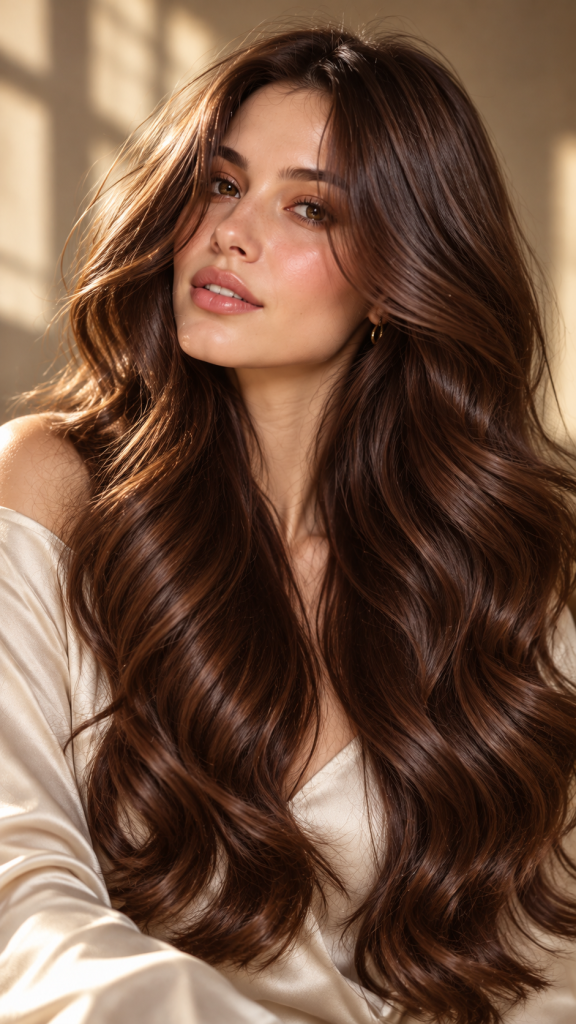
Deep Woodland Chestnut Brown is an exceptionally refined interpretation of warm brunette hair.
Inspired by the naturally rich coloring of polished chestnut wood and the deep brown tones found in autumn forests, this shade creates an elegant balance between darkness, warmth, and understated reddish reflections.
The foundation is a deep, earthy brown rather than black or espresso.
Within that foundation, muted mahogany pigments introduce subtle warmth that becomes visible in natural light. The mahogany influence should remain restrained, allowing the hair to maintain its overall chestnut character.
The result is a color that looks sophisticated from a distance and increasingly interesting when viewed up close. 🤎
Why Woodland Chestnut Brown Hair Looks So Sophisticated
The strongest feature of this color is its controlled warmth.
Many people associate reddish brown hair with visibly vibrant red pigmentation. Woodland Chestnut Brown demonstrates that red undertones can create elegance without becoming the dominant visual element.
In darker lighting, the color appears like a rich natural brunette.
Under daylight, delicate warm reflections emerge along the surface of the hair, particularly where the strands curve around the face or fall across the shoulders.
This creates the impression of naturally complex pigmentation rather than obvious artificial highlights.
Another advantage is the way deep chestnut shades can enhance the silhouette of a haircut.
A blunt bob looks especially polished when the color remains consistent throughout the perimeter. Long, softly layered hair develops a more romantic appearance as the reddish undertones become visible through movement.
For naturally curly hair, the combination of dark brown depth and gentle warm reflection can emphasize individual curl shapes.
The final impression is timeless rather than overly trend-driven.
How to Achieve Deep Woodland Chestnut Brown Hair
The approach depends heavily on the natural starting shade.
Someone with naturally medium-brown hair may need only a carefully selected warm brunette formulation or professional gloss to create a richer chestnut appearance.
Naturally dark-brown hair can sometimes achieve a subtle chestnut reflection through color deposition, although significant visible lightening generally requires additional processing.
On previously lightened hair, achieving deep woodland chestnut may require restoring missing warm pigments before the final brunette shade is applied.
This is because chemically lightened hair can absorb and display color differently from untouched natural hair.
A professional colorist can evaluate whether a permanent color, demi-permanent color, or a combination of techniques would best achieve the desired result.
The goal is to create a rich chestnut shade that feels integrated from roots to ends.
Instead of requesting an intense burgundy or red-brown finish, describe the desired result as a deep brunette with subtle mahogany warmth and natural chestnut reflections.
This distinction helps preserve the elegant woodland appearance.
Best Hairstyles for Deep Woodland Chestnut Brown Hair
A sleek chin-length bob is one of the most striking ways to showcase this color.
The clean silhouette emphasizes the depth of the brunette foundation, while subtle shine reveals the hidden warmth.
A collarbone-length haircut with soft inward-curving ends offers a gentler alternative. The curved ends catch natural light and create small areas of visible tonal variation.
For longer hair, polished S-shaped waves beautifully complement woodland chestnut. Rather than introducing obvious light streaks, the waves reveal different sides of the same rich color.
Natural curls can also be particularly flattering.
A defined curl pattern produces multiple reflective surfaces, allowing chestnut and mahogany undertones to appear throughout the hairstyle.
The most effective styling approach focuses on smoothness, natural movement, and healthy-looking texture rather than excessive volume or heavy finishing products.
Who Should Choose Woodland Chestnut Brown Hair
Woodland chestnut is ideal for people who want a warm brunette color that remains relatively understated.
It may especially appeal to someone transitioning away from very dark hair who wants visible softness without making a dramatic move toward lighter brown.
People who prefer minimalist fashion, classic tailoring, neutral makeup, and naturally elegant hairstyles may also appreciate its quiet sophistication.
The shade can be customized for different complexions by adjusting the balance of brown and red pigments.
For example, a deeper neutral-brown formulation may suit someone who prefers restrained warmth, while a slightly more mahogany-influenced version may appeal to someone who enjoys red-brown reflections.
Skin undertone can provide useful guidance, but it should not be treated as a rigid rule. Eye color, personal preference, natural pigmentation, and makeup choices also influence how harmonious a particular shade appears.
🍂 Woodland chestnut is especially beautiful for anyone who believes that subtle richness can make a stronger impression than dramatic color contrast.
How to Maintain Woodland Chestnut Brown Hair
Because woodland chestnut relies on deep brunette pigments, maintaining richness is essential.
Frequent washing with aggressive cleansing products can contribute to fading, particularly when the hair has been chemically colored.
A gentle shampoo suitable for color-treated hair and a moisturizing conditioner can help preserve the appearance of smooth, reflective strands.
Water temperature also matters.
Very hot water can contribute to dryness and may accelerate the visible fading of some artificial pigments. Using comfortably lukewarm water is a simple way to make a color-care routine gentler.
Heat styling should be approached thoughtfully.
A heat protectant and moderate styling temperatures can help reduce avoidable damage, while regular conditioning supports the reflective surface that makes dark chestnut hair look so luxurious.
A professional gloss may be useful when the color begins to lose its original richness.
Depending on the color service and individual hair characteristics, maintenance appointments might be spaced several weeks apart.
🥈 Top 2 Chestnut Brown Hair With Soft Cinnamon Veils and Romantic Warmth
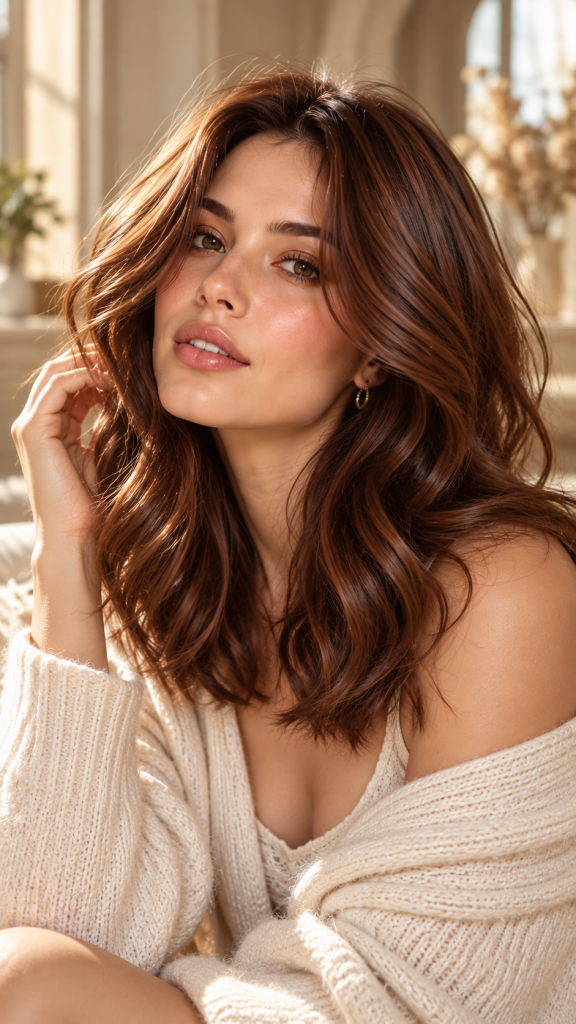
Cinnamon Veil Chestnut Brown takes the naturally warm characteristics of chestnut hair and gives them a softer, more romantic expression.
Instead of emphasizing deep mahogany, this variation combines medium chestnut brown with delicate cinnamon-colored warmth.
The result is not bright copper hair or strongly red auburn.
It is a beautifully balanced brunette with a subtle reddish glow that feels diffused throughout the hair.
Imagine the warm brown color of roasted chestnuts combined with the muted reddish tones of finely ground cinnamon.
This creates a shade that feels inviting, feminine, and naturally radiant without becoming excessively bright. ✨
What Makes Cinnamon Veil Chestnut Brown Hair Unique
The defining feature is the way warm pigments appear evenly distributed rather than concentrated in obvious streaks.
A traditional highlighting technique may produce clearly identifiable lighter pieces.
Cinnamon Veil Chestnut Brown aims for a more integrated effect.
The chestnut foundation remains dominant, while delicate cinnamon undertones provide warmth across the mid-lengths and ends.
In soft daylight, these undertones become especially visible.
The color can appear gently illuminated without requiring dramatic lightening or strong golden highlights.
This is particularly attractive on naturally wavy hair, where subtle changes in reflection make the warm pigmentation appear more dynamic.
The overall effect feels romantic, relaxed, and sophisticated.
It is an excellent choice for people who want to introduce reddish warmth while staying within the brunette color family.
How Cinnamon Veil Chestnut Brown Hair Differs From Auburn
Chestnut brown and auburn can sometimes look similar, especially in photographs taken under warm lighting.
However, their dominant pigments create different overall impressions.
Auburn typically has a more noticeable red or copper identity.
Chestnut brown, even when enhanced with cinnamon tones, should still read primarily as brown.
This means the reddish influence should complement the brunette base rather than replace it.
A successful Cinnamon Veil Chestnut Brown formulation may combine a medium neutral-brown foundation with restrained warm red-copper pigment.
The exact balance depends on the person’s starting color and how strongly the hair reveals warm undertones.
For naturally warm brown hair, subtle color deposition may be sufficient to enhance the existing chestnut character.
For cooler brunette hair, a stylist may need to introduce carefully balanced warmth.
If the hair has previously been lightened or colored, a different approach may be necessary to prevent uneven warmth.
The essential goal is a gentle cinnamon reflection rather than a saturated orange-red finish.
Best Haircuts for Cinnamon Veil Chestnut Brown Hair
Medium-length layered hair is particularly well suited to this romantic color.
Layers introduce natural movement, allowing the soft cinnamon undertones to appear in different lighting conditions.
A shoulder-length haircut with rounded ends offers a polished everyday appearance.
When styled with gentle waves, the color becomes more expressive because the curved strands reflect light unevenly.
Long hair with subtle face-framing layers is another beautiful option.
The warm chestnut shade creates a cohesive look, while the layers introduce visual softness around the face.
For people who prefer shorter hair, a softly textured French-inspired bob can also complement Cinnamon Veil Chestnut Brown.
The combination of a relaxed haircut and naturally warm color creates a charming aesthetic without requiring complicated styling.
One of the greatest advantages of this shade is its flexibility.
It can look polished with a smooth blowout, romantic with loose curls, and effortlessly casual with natural waves.
Why Cinnamon Chestnut Brown Hair Can Complement Different Complexions
Warm brunette colors interact with skin undertones in interesting ways.
On some warm or neutral complexions, cinnamon reflections may create a harmonious overall palette.
On certain cool complexions, the contrast between a cooler skin undertone and a warm chestnut shade can also look attractive.
The key is controlling the intensity of the red and copper components.
A very strong copper-red formulation may create a bolder result than someone expects.
A more restrained reddish brown can provide warmth while maintaining versatility.
This is why choosing the correct shade depth is just as important as selecting the underlying tone.
Medium chestnut can appear softer than very dark brown, while a deeper cinnamon chestnut may create more contrast against lighter skin.
For deeper complexions, richer chestnut formulations can provide beautiful warmth while preserving depth.
There is no single complexion that exclusively belongs with chestnut brown hair.
The most successful version is the one that supports the wearer’s preferred appearance and desired level of contrast.
How to Style Cinnamon Veil Chestnut Brown Hair for a Romantic Finish
Loose, brushed-out waves are especially beautiful with this shade.
They create a smooth, flowing surface while allowing subtle warm reflections to move through the hairstyle.
For everyday styling, a low loose bun with a few face-framing sections can emphasize the softness of the color.
A half-up hairstyle is another appealing choice.
By bringing selected sections away from the face, it reveals the contrast between the outer surface of the hair and the slightly deeper areas underneath.
Soft braids can also look beautiful because woven sections reflect light at different angles.
The goal is not to produce dramatic contrast between strands but to showcase the natural dimension of the chestnut pigments.
Accessories in warm metallic tones, cream, muted olive, chocolate brown, or antique bronze can complement the overall aesthetic.
🌷 The beauty of cinnamon chestnut is its ability to make simple hairstyles feel intentionally romantic.
Maintaining the Warmth in Cinnamon Chestnut Brown Hair
Warm red and copper pigments can become less noticeable as artificial hair color fades.
This means a cinnamon-influenced chestnut shade may require occasional tonal refreshing to preserve its original appearance.
A color-safe shampoo and conditioner provide a sensible foundation.
Limiting unnecessarily frequent washing may also help reduce visible fading.
For people who heat-style regularly, using appropriate thermal protection is especially important.
Damaged and porous hair can look dull and may hold artificial color less evenly.
A weekly conditioning treatment can help improve the feeling of softness and manageability, although it cannot permanently repair chemically damaged hair.
Color-depositing products may be useful in some cases, but choosing the wrong shade can push the result too far toward red or orange.
A stylist can recommend a suitable maintenance product based on the exact chestnut formulation.
🥉 Top 3 Chestnut Brown Hair With Toasted Amber Reflections and Naturally Luminous Dimension
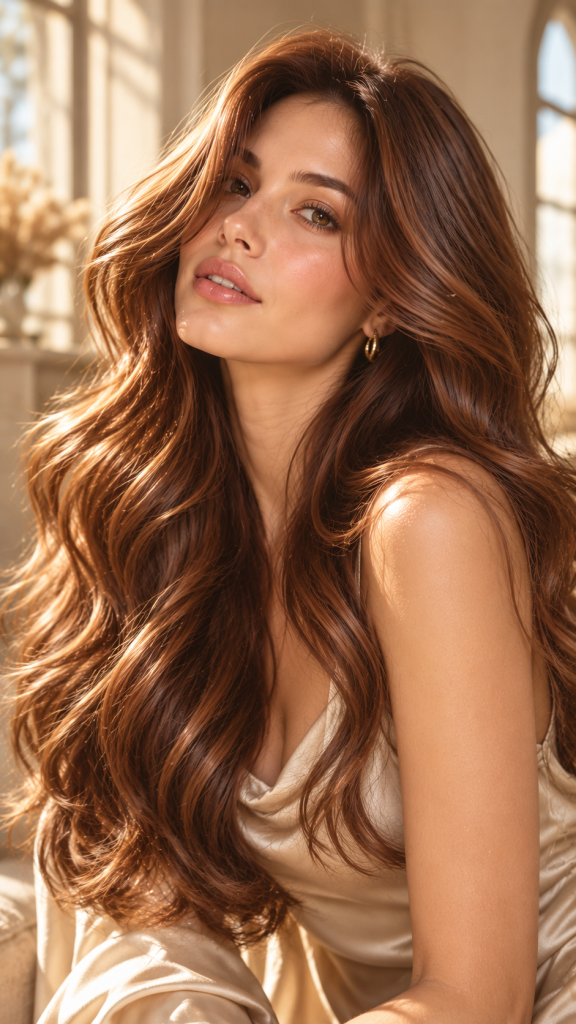
Amber Reflection Chestnut Brown is the brightest and most light-responsive option in this collection.
It combines a warm chestnut foundation with delicate amber-toned reflections that appear to glow when natural light reaches the hair.
Unlike conventional caramel balayage, this concept does not depend on broad blonde ribbons or a pronounced transition from dark roots to light ends.
Instead, its beauty comes from finely controlled variations within the chestnut color family.
The difference between darker and lighter areas remains subtle.
The finished hair should look like warm brown strands naturally illuminated by sunlight rather than heavily highlighted hair. 🌤️
Why Amber Reflection Chestnut Brown Hair Looks So Radiant
Amber is known for its warm golden and reddish tones.
When translated into chestnut hair color, these influences can create soft, luminous accents without changing the overall brunette identity.
The foundation remains a recognizable warm brown.
Delicate amber reflections are introduced through selected strands or surface sections, producing a gentle sense of movement.
Because the tonal contrast is restrained, the hair maintains a cohesive appearance.
This makes Amber Reflection Chestnut Brown particularly beautiful in natural daylight.
Individual strands may appear slightly lighter when sunlight reaches them, while deeper chestnut sections provide richness and structure.
In evening lighting, the shade can look warmer and more intimate.
Under neutral indoor lighting, the amber accents may become less pronounced, leaving a polished medium-brown appearance.
The color therefore has a naturally changing visual character.
How Amber Chestnut Brown Hair Avoids the Typical Highlighted Look
The placement and intensity of lighter tones are crucial.
If too much hair is lightened, the result may begin to resemble caramel highlights or traditional brunette balayage.
For Amber Reflection Chestnut Brown, the objective is different.
The amber sections should remain close enough to the chestnut foundation to create a soft tonal relationship.
Rather than emphasizing individual bright streaks, the color should appear naturally varied.
A stylist may use very fine sections and carefully selected tonal placement to introduce understated brightness.
On some starting shades, a warm gloss can enhance existing lighter areas.
On darker hair, achieving visible amber reflections may require selective lightening before the desired color is deposited.
The technique should be adapted to the individual’s starting shade, color history, and hair condition.
Maintaining enough brunette depth is essential.
Without that depth, the finished result can lose the richness that makes chestnut brown distinctive.
Best Hairstyles for Amber Reflection Chestnut Brown Hair
Amber chestnut looks particularly striking on hairstyles that create movement and expose different surfaces of the hair.
Long, softly cascading waves are an excellent example.
Each wave catches light along its curved outer surface, revealing the amber reflection while preserving darker chestnut tones beneath.
Medium-length hair with subtle internal layers can also showcase the effect beautifully.
The layers help the hair move without requiring dramatic feathering or excessive texture.
A sleek long bob offers a more architectural interpretation.
When the hair falls straight, the amber tones appear as delicate light variations rather than contrasting highlights.
For curly hair, the color can emphasize curl definition.
Because individual curls naturally reflect light from different directions, even a subtle amber influence can become visible across the hairstyle.
Short hair can also benefit from the shade.
A textured pixie or softly layered short bob may reveal warm reflections through the crown and front sections.
The important consideration is maintaining the balance between chestnut depth and softly illuminated warmth.
Why Amber Chestnut Brown Hair Is Ideal for a Gentle Color Refresh
Not everyone wants an entirely new hair color.
Sometimes the goal is simply to make an existing brunette shade appear softer, warmer, and more luminous.
Amber Reflection Chestnut Brown can be a beautiful option for that purpose.
Someone who already has medium-brown hair may be able to introduce controlled warmth without dramatically changing the underlying depth.
The result can feel familiar while still creating a noticeable visual improvement.
This makes the concept especially appealing for people who appreciate natural-looking transformations.
It can also be adapted for various personal styles.
On sleek hair, amber chestnut appears refined and contemporary.
On long waves, it becomes romantic and expressive.
On naturally textured hair, it emphasizes movement and dimension.
The versatility comes from the restrained use of lighter tones rather than a dramatic change in overall shade.
How to Keep Amber Reflection Chestnut Brown Hair Looking Fresh
Because this variation includes subtle lighter reflections, maintaining tonal harmony is important.
Over time, artificial color may fade, and pre-lightened sections can begin to reveal unwanted warmth.
For some people, that warmth may still complement the chestnut shade.
For others, it may become more orange or golden than intended.
A professional gloss or toner can help restore the desired balance.
Regular conditioning is equally important because reflective shine enhances the visibility of amber tones.
When hair becomes dry or rough, light may scatter unevenly, making the color appear less polished.
Protecting hair from excessive heat, unnecessary chemical processing, and prolonged sun exposure can help maintain its overall appearance.
For longer hair, particular attention should be paid to the ends, which are often more porous and prone to dryness.
💎 The most beautiful amber chestnut result is one that looks luminous without sacrificing the smoothness and richness of the brunette foundation.
How to Choose the Right Chestnut Brown Hair Shade for Your Natural Hair Color
Selecting the ideal chestnut shade begins with understanding the starting color.
Although reference photographs are useful, the same formula can produce different results on different hair types.
Natural pigmentation, previous coloring, porosity, gray coverage needs, and existing warmth all influence the finished result.
For that reason, it is more useful to identify the desired color characteristics than to expect an exact reproduction of a photograph.
Chestnut Brown Hair for Naturally Black or Very Dark Brown Hair
Naturally very dark hair can provide a beautiful foundation for deep chestnut tones.
However, it is important to distinguish between subtle warm reflection and visible overall lightening.
A warm color-depositing product may introduce some chestnut character to suitable natural hair, but it may not create a clearly lighter medium-brown shade.
Permanent oxidative color can sometimes lift untreated natural hair, depending on the formula and starting level.
Previously dyed dark hair usually presents a different challenge because applying another permanent color does not reliably lighten existing artificial pigment.
For someone seeking a conservative transformation, Woodland Chestnut Brown may be an appealing starting point.
Its deeper foundation can preserve much of the natural appearance while introducing refined warmth.
Chestnut Brown Hair for Natural Medium Brunettes
Medium-brown hair often offers considerable flexibility.
Depending on its natural undertones, it may already contain some of the warmth associated with chestnut.
Enhancing those existing pigments can create a beautiful result without an extreme color change.
Cinnamon Veil Chestnut Brown may be particularly attractive for someone who wants soft reddish warmth.
Amber Reflection Chestnut Brown offers another direction for those who want a brighter overall appearance while maintaining a brunette identity.
The final choice depends on how noticeable the transformation should be.
A subtle gloss can create a gentle refresh, while permanent color or selective lightening may produce a stronger difference.
Chestnut Brown Hair for Blonde or Previously Lightened Hair
Transitioning from blonde to chestnut can create a dramatic and sophisticated transformation.
However, lightened hair may lack some of the underlying warm pigments that naturally support brunette shades.
Applying brown color directly to very light or porous hair can sometimes produce unexpected results, including an overly cool, hollow, or uneven appearance.
A professional colorist may recommend a filling step to restore appropriate warm pigment before applying the target chestnut shade.
This helps create a more balanced result.
The desired depth should also be considered carefully.
A medium chestnut may feel significantly darker when someone is accustomed to blonde hair, particularly immediately after coloring.
Choosing the final shade with a stylist can help avoid a transformation that feels unexpectedly heavy.
How to Match Chestnut Brown Hair With Your Skin Undertone and Personal Style
Skin undertones can influence how a hair color appears, but they do not determine whether someone can wear a particular shade.
The relationship between hair and complexion is more flexible than simple rules might suggest.
Depth, contrast, makeup, clothing, and personal preference all contribute to the overall appearance.
Chestnut Brown Hair for Warm Undertones
Warm complexions often coordinate naturally with golden, peachy, or softly reddish tones.
Cinnamon Veil Chestnut Brown may create a harmonious appearance because its gentle warmth echoes similar tones in the skin.
Amber Reflection Chestnut Brown can also look beautiful when the amber accents remain refined rather than excessively golden.
For a more subtle result, increasing the neutral-brown foundation can prevent the finished shade from appearing too warm.
Chestnut Brown Hair for Cool Undertones
People with cooler complexions can also wear chestnut brown successfully.
The key may be selecting a shade with controlled warmth.
Woodland Chestnut Brown can offer a sophisticated balance through its deeper brown foundation and restrained mahogany reflections.
A medium chestnut with muted reddish tones is another possibility.
Rather than assuming warm hair colors are incompatible with cool skin, it is worth considering the desired level of contrast.
Some people prefer harmonious coloring, while others enjoy the visual interest created by contrasting tones.
Chestnut Brown Hair for Neutral and Olive Undertones
Neutral complexions often work with a wide variety of chestnut variations.
Depending on personal preference, the shade can lean deeper, softer, or more luminous.
Olive complexions can also look striking with chestnut brown, especially when the formulation balances earthy brown depth with carefully controlled red warmth.
The ideal result depends on the individual’s particular skin coloring rather than the undertone label alone.
A professional consultation and viewing sample shades in different lighting conditions can help identify the most appealing direction.
How to Make Chestnut Brown Hair Look Glossy and Expensive Without Heavy Styling
Chestnut brown depends heavily on the quality of its reflective surface.
Because the color incorporates subtle tonal variation rather than dramatic contrasting sections, shine helps reveal the warmth and dimension.
Fortunately, achieving a polished appearance does not require complicated styling every day.
Build a Simple Chestnut Brown Hair Care Routine
Start with cleansing products appropriate for the scalp and hair type.
A gentle shampoo can remove buildup without making the lengths feel unnecessarily dry.
Conditioner should be applied primarily where the hair needs moisture and manageability.
For long or chemically treated hair, concentrating conditioner through the mid-lengths and ends can help reduce tangling.
A lightweight leave-in conditioner may provide additional manageability, particularly for naturally textured or dry hair.
The goal is smoothness rather than excessive product layering.
When too many heavy styling products accumulate on the strands, the hair can appear weighed down and less naturally reflective.
Use Heat Styling Carefully
Heat styling can create a beautiful polished finish, but excessive temperatures can contribute to damage.
A suitable heat protectant should be used before blow-drying, curling, or straightening.
Lower temperatures may be sufficient for finer or more fragile hair, while thicker hair may require different styling techniques.
Avoid repeatedly passing a hot tool over the same section.
For a refined chestnut finish, large soft waves are often more effective than tightly defined curls.
They allow wide sections of the hair to reflect light, creating a smooth and luxurious appearance.
A sleek blowout can achieve a similarly elegant effect.
Protect Chestnut Brown Hair From Environmental Fading
Sun exposure can contribute to hair-color fading, particularly when artificial pigments are involved.
When spending extended periods outdoors, a hat or other physical protection can help limit direct exposure.
Pool chemicals and frequent washing can also affect the appearance of colored hair.
Rinsing after swimming and using appropriate cleansing and conditioning products may help reduce unwanted buildup.
Avoiding unnecessary chemical processing is another important consideration.
Repeated coloring, lightening, or aggressive treatments can increase porosity, making the hair more difficult to maintain.
Healthy-looking texture provides the foundation for the luxurious chestnut effect.
Important Note: Always perform the manufacturer’s recommended allergy alert test before using hair dye, even if the product has been used before. Results depend on natural hair color, previous treatments, and hair condition. Bleaching or correcting previously dyed hair can cause damage, so significant color changes are best planned with a qualified professional. An allergy alert test does not guarantee that a reaction will not occur.
Chestnut Brown Hair Maintenance Schedule for Long Lasting Color
A consistent maintenance routine can help preserve both the warmth and reflective quality of chestnut brown.
However, the appropriate schedule depends on the type of color service.
Permanent color, demi-permanent color, tinted glosses, and selectively lightened sections do not all fade or grow out at the same rate.
| Maintenance Step | Suggested Frequency | Main Purpose |
|---|---|---|
| Gentle shampoo and conditioner | As needed for scalp and hair type | Maintain cleanliness and softness |
| Moisturizing hair mask | Approximately once weekly if needed | Improve manageability and reduce dryness |
| Heat protection | Before each heat styling session | Limit preventable heat damage |
| Color gloss or tonal refresh | Often around 4–8 weeks if needed | Restore color richness and shine |
| Root touch-up | Often around 4–8 weeks for permanent coverage | Address visible regrowth |
| Hair trim | According to condition and haircut | Maintain shape and remove damaged ends |
| Professional color assessment | Whenever significant fading or uneven color appears | Adjust the shade safely |
These intervals are general guidance rather than rigid requirements.
Someone with a low-contrast demi-permanent chestnut color may be able to wait longer between appointments.
A person covering gray roots with permanent color may prefer more frequent maintenance.
Likewise, hair that has been lightened before receiving a chestnut shade may require closer attention to fading.
The objective is to keep the color balanced without creating unnecessary chemical exposure.
Common Chestnut Brown Hair Coloring Mistakes to Avoid
Even a beautiful chestnut shade can become disappointing when the underlying tone, depth, or maintenance requirements are misunderstood.
Understanding the most common mistakes can help create a more predictable transformation.
Choosing a Chestnut Shade That Is Too Red
One frequent issue is confusing chestnut brown with a stronger auburn or copper shade.
Although chestnut contains reddish warmth, brown should remain the dominant impression.
Choosing a formulation with excessive copper or red intensity may create a brighter result than expected.
This is particularly noticeable on naturally lighter or previously lightened hair.
Discussing the desired balance between brown and red with a colorist can help clarify the outcome.
A useful description is warm brunette with subtle red-brown reflections rather than vivid auburn.
Making Chestnut Brown Hair Too Dark
Another common mistake is selecting a shade that is significantly darker than intended.
Deep chestnut should still reveal some brown identity.
If the result approaches black, subtle reddish reflections may become difficult to see under normal lighting.
This can make the hair appear flatter than expected.
For someone who wants a visibly warm brunette transformation, medium-dark chestnut may be more suitable than the deepest possible brown formulation.
Ignoring Previous Hair Color
Previously dyed hair responds differently from untreated natural hair.
Artificial dark pigments can limit the effectiveness of later lightening attempts.
Previously bleached sections may absorb color unevenly.
Repeated color applications can also create darker buildup through the lengths and ends.
Applying the same product from roots to ends does not guarantee a uniform result.
Understanding the hair’s coloring history helps determine whether a different formulation or application strategy is necessary.
Relying on Photographs Taken Under Warm Lighting
Hair-color photographs can be misleading.
Golden-hour sunlight, indoor lamps, editing, and camera white balance can make brunette hair appear significantly warmer or lighter than it actually is.
A chestnut shade that looks coppery in one photograph may appear neutral brown in another.
When selecting inspiration, compare photographs taken in both natural daylight and neutral indoor lighting.
This provides a better understanding of how the color may look in everyday situations.
Frequently Asked Questions About Chestnut Brown Hair
Is Chestnut Brown Hair More Brown or Red?
Chestnut brown is primarily brown with noticeable but restrained reddish warmth.
The exact appearance depends on the formulation and shade depth.
Some versions contain more mahogany influence, while others lean toward cinnamon or amber.
The defining characteristic is that the overall impression remains brunette.
Is Chestnut Brown Hair Suitable for Every Season?
Yes. Chestnut brown is a versatile color that can be worn throughout the year.
Deeper woodland shades can feel especially sophisticated during autumn and winter.
Softer cinnamon or amber variations may create a more luminous appearance during spring and summer.
Seasonal associations are aesthetic preferences rather than limitations.
Can Chestnut Brown Hair Be Achieved Without Bleach?
Often, yes, depending on the starting color and desired result.
Someone with natural medium-brown hair may be able to create chestnut warmth through color deposition.
Someone with very dark hair who wants a substantially lighter chestnut shade may require lightening.
Previously dyed dark hair can be more challenging because artificial pigment may need to be reduced before a lighter result is possible.
Does Chestnut Brown Hair Fade Quickly?
Fading depends on the coloring method, product formulation, hair porosity, washing habits, and environmental exposure.
Warm red and copper components may become less visible over time.
Regular conditioning, gentle cleansing, and appropriate tonal maintenance can help preserve the appearance.
Can Chestnut Brown Hair Cover Gray Hair?
Certain permanent hair-color formulations can provide gray coverage while creating a chestnut shade.
The result depends on the percentage of gray hair, natural pigmentation, and the chosen product.
Demi-permanent color may offer softer blending rather than complete opaque coverage.
A stylist can recommend the most appropriate approach for the desired finish.
Is Chestnut Brown Hair a Good Choice for Fine Hair?
Chestnut brown can look beautiful on fine hair.
A uniform, polished shade may create a refined appearance, while restrained tonal variation can help emphasize movement.
However, hair color does not physically increase strand thickness.
A suitable haircut, gentle styling, and avoiding excessive chemical processing remain important.
Does Chestnut Brown Hair Require a Professional Salon?
Not every chestnut coloring service requires a salon.
A simple shade adjustment on suitable, untreated hair may be achievable with an appropriate home-color product.
However, previously dyed hair, significant lightening, complicated gray coverage, or correction of uneven color can require professional expertise.
The more complex the starting condition and desired change, the greater the benefit of a professional consultation.
Final Thoughts on the Top 3 Chestnut Brown Hair Ideas
Chestnut brown hair proves that a beautiful transformation does not have to rely on dramatic highlights, striking contrasts, or unconventional colors.
Its greatest strength lies in the relationship between brunette richness and natural-looking warmth.
The most appealing chestnut shades preserve enough brown depth to remain sophisticated while allowing subtle reddish or amber reflections to create personality.
🥇 Deep Woodland Chestnut Brown is the ideal choice for someone who loves understated elegance. Its deep earthy foundation and restrained mahogany warmth create a polished, timeless appearance that looks particularly beautiful on sleek bobs, long waves, and defined curls.
🥈 Cinnamon Veil Chestnut Brown offers a softer, more romantic direction. Its warm reddish-brown undertones create an inviting glow while maintaining the natural character of medium brunette hair. It is especially appealing for softly layered hair, flowing waves, and relaxed hairstyles.
🥉 Amber Reflection Chestnut Brown provides the most luminous interpretation. Subtle amber-toned sections introduce light-catching movement while keeping the overall color unmistakably chestnut. It is a beautiful choice for anyone who wants a gentle brunette refresh rather than a dramatic highlighted transformation.
The secret to choosing the right version is understanding how much depth, warmth, and visible reflection feels most appealing.
A darker shade can create mystery and refinement. A cinnamon influence brings softness and romance. Delicate amber reflections introduce brightness without overpowering the underlying brunette color.
Whichever direction feels most attractive, a carefully balanced chestnut shade can make everyday hair look exceptionally beautiful.
With appropriate color selection, thoughtful maintenance, and styling that enhances natural movement, chestnut brown hair can deliver the kind of rich, sophisticated beauty that never depends on dramatic trends to make an impression. ✨