Serious Skin Care for Women Over 40 is not about chasing the appearance of twenty-year-old skin or filling your bathroom shelves with expensive beauty products. It is about discovering the right combination of skincare ingredients, healthy routines, and targeted treatments that help mature skin look smoother, healthier, firmer, and naturally radiant. The surprising truth is that a thoughtfully designed skincare routine can often deliver more satisfying results than a complicated collection of trendy products.
After turning 40, many women begin noticing changes that their previous skincare routines no longer seem to address. Fine lines become more noticeable, skin may feel unusually dry, dark spots can appear more prominent, and the once-familiar glow may seem harder to maintain. These changes are completely natural, but they do not mean beautiful, vibrant skin is out of reach. ✨
The secret lies in understanding what mature skin actually needs. Instead of following every new beauty trend, a serious approach focuses on three essential strategies: protecting the skin barrier, supporting collagen and improving skin texture, and preventing further environmental damage.
The following three skincare secrets offer a practical approach to maintaining healthy, luminous skin throughout your 40s, 50s, and beyond.
Why Serious Skin Care for Women Over 40 Requires a Different Approach
Your skin changes gradually throughout adulthood, but the differences can become more noticeable during your 40s. Natural collagen production declines over time, and accumulated sun exposure may begin revealing itself through uneven pigmentation, fine lines, and changes in skin texture.
Hormonal fluctuations associated with perimenopause can also influence the way skin behaves. Some women experience increased dryness and sensitivity, while others develop unexpected adult acne or notice that their skin reacts differently to familiar products.
These changes explain why the skincare routine that worked beautifully at 30 may no longer feel sufficient at 45.
Fortunately, mature skin does not automatically require complicated treatments. A gentle cleanser, well-formulated moisturizer, daily sunscreen, and carefully selected active ingredients can form the foundation of an effective routine.
What matters most is choosing products according to your individual concerns rather than assuming every woman over 40 needs the same solutions.
Understanding Collagen Loss and Changes in Skin Elasticity
Collagen is a structural protein that helps skin maintain firmness and resilience. Alongside elastin and other components of the skin’s supporting structure, it contributes to the smooth, supple appearance associated with healthy skin.
As collagen production and maintenance change with age, fine lines may become more visible, and facial contours can gradually look less defined.
This process can be influenced by several factors, including genetics, hormonal changes, smoking, and ultraviolet exposure.
Although topical skincare cannot completely reverse natural aging or restore significant lost facial volume, certain ingredients can improve the appearance of fine lines, uneven texture, and sun-damaged skin.
Retinoids are especially noteworthy because they have substantial research supporting their ability to improve some visible signs of photoaging.
Why Mature Skin Often Becomes Drier and More Sensitive
Another important change involves the skin barrier, the outermost protective layer that helps retain moisture and defend against environmental irritants.
When this barrier becomes less effective, skin may feel tight after cleansing, develop rough patches, or become more reactive to exfoliating acids and fragranced products.
Hormonal changes around menopause can contribute to reduced moisture retention, making hydration especially important.
💧 This is why serious skincare should focus on strengthening and protecting the skin before introducing aggressive treatments.
A healthy skin barrier makes a routine more comfortable and can help women tolerate beneficial active ingredients without unnecessary dryness or irritation.
🥇 Best 1 Serious Skin Care for Women Over 40 With Deep Hydration and Skin Barrier Repair
The first essential strategy is surprisingly simple: prioritize moisture and barrier protection.
Many women focus almost exclusively on reducing wrinkles, overlooking the fact that dehydrated skin can make fine lines appear more noticeable.
When the skin is adequately moisturized, its surface often looks smoother and feels softer. Fine dehydration lines may become less apparent, while the complexion gains a healthier, more comfortable appearance.
A strong hydration routine is also important for women using retinoids or other active treatments because these ingredients can sometimes cause dryness.
Choose a Gentle Cleanser That Does Not Strip Natural Oils
A good skincare routine begins with cleansing, but mature skin generally benefits from a gentler approach than the harsh, squeaky-clean formulas once popular in skincare.
Cream cleansers, hydrating gels, and mild fragrance-free formulas can remove everyday impurities without leaving the face uncomfortably tight.
Look for a cleanser that rinses clean while preserving the skin’s natural comfort. People with dry skin may prefer a creamy or lotion-like texture, while those with combination skin may enjoy a gentle gel cleanser.
Use lukewarm water rather than very hot water, and massage the cleanser gently with your fingertips.
Avoid rough cleansing brushes and aggressive scrubbing, particularly if your skin is sensitive.
A practical morning routine may require only a gentle cleanse or a water rinse, depending on skin type and personal preference. In the evening, cleansing is especially important for removing sunscreen, makeup, oil, and daily debris.
Use Hyaluronic Acid to Support Skin Hydration
Hyaluronic acid is a popular skincare ingredient because of its ability to attract and bind water.
When included in a well-formulated serum or moisturizer, it can help the outer skin layers feel more hydrated and temporarily improve the appearance of dehydration-related fine lines.
For women over 40, this makes hyaluronic acid particularly useful when skin starts feeling less plump or comfortable.
Apply a hydrating serum according to its directions, often before moisturizer. Using a moisturizer afterward helps support the skin’s moisture balance.
However, hyaluronic acid is not a replacement for a complete moisturizing formula.
Skin often benefits from a combination of humectants, which attract water, emollients, which soften the skin, and occlusive ingredients, which reduce moisture loss.
✨ Beautiful skincare tip: Choose hydration products that leave your skin feeling comfortable for hours rather than focusing only on an immediate glossy finish.
Restore the Skin Barrier With Ceramides and Nourishing Moisturizers
Ceramides are naturally occurring lipids found in the skin barrier. They help maintain the protective structure that limits excessive moisture loss.
Moisturizers containing ceramides can be especially helpful when mature skin feels persistently dry or sensitive.
Other beneficial moisturizing ingredients include glycerin, squalane, petrolatum, and dimethicone.
For normal to dry skin, a cream-based moisturizer may provide longer-lasting comfort than a very lightweight gel.
Women with oily or acne-prone skin can still benefit from barrier care, but a lighter, non-comedogenic lotion may feel more suitable.
The ideal moisturizer should make the skin feel soft and comfortable without persistent stinging, itching, or congestion.
Create a Luxurious Evening Hydration Ritual
An evening skincare routine provides an opportunity to replenish moisture after daily exposure to wind, dry indoor air, and other environmental conditions.
Begin with gentle cleansing and apply any suitable treatment products before finishing with a nourishing moisturizer.
For particularly dry areas, a small amount of petrolatum-based ointment may help reduce moisture loss, provided the product is appropriate for your skin.
Do not assume that every nighttime cream needs to contain strong anti-aging ingredients. Sometimes a simple moisturizer is exactly what sensitive skin needs.
A consistent routine is generally more beneficial than frequently switching between products.
Why this skincare strategy deserves first place: Hydration and barrier care support nearly every other skincare goal. They can improve comfort, smooth the appearance of dry skin, and make a carefully planned routine easier to maintain.
🥈 Best 2 Serious Skin Care for Women Over 40 With Retinol and Targeted Anti Aging Ingredients
The second strategy focuses on ingredients that address specific visible concerns, including fine lines, uneven tone, rough texture, and sun-related skin changes.
This is where skincare becomes more targeted.
Instead of choosing products based only on luxury packaging or promises of dramatic rejuvenation, look for ingredients with evidence supporting their benefits.
Retinoids, vitamin C, and selected exfoliating ingredients can play useful roles, but they should be introduced thoughtfully.
The goal is not to use every active ingredient simultaneously. It is to create a routine that delivers benefits without overwhelming the skin.
Introduce Retinol Gradually for Smoother Looking Skin
Retinol belongs to the retinoid family, a group of vitamin A derivatives used in skincare.
Retinoids can influence skin cell turnover and collagen-related processes, helping improve some signs of photoaging over time.
For women concerned about fine lines, rough texture, or uneven pigmentation, an appropriate retinoid may be worth considering.
However, stronger does not automatically mean better.
Retinol can cause dryness, irritation, and peeling, particularly when introduced too quickly.
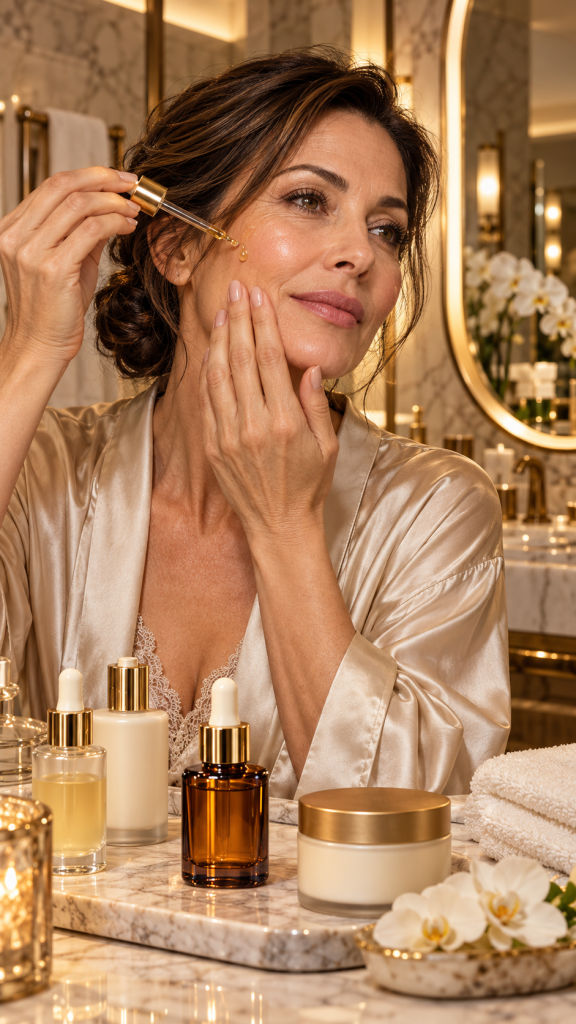
A cautious approach is to begin with a low-strength formula on two nonconsecutive evenings per week, provided the product directions and your skin’s tolerance support this schedule.
Gradually increase frequency only when the skin remains comfortable.
Some women benefit from applying moisturizer before and after their retinoid, an approach often called the moisturizer sandwich method.
Results develop gradually. Improvements in texture may appear before more noticeable changes in fine lines, and meaningful results often require several months of consistent use.
Retinoids are not suitable for everyone, particularly during pregnancy.
Brighten Uneven Skin Tone With Vitamin C
Vitamin C is an antioxidant commonly used in skincare to help address dullness, uneven pigmentation, and some visible effects of environmental exposure.
Certain topical vitamin C formulations may improve the appearance of dark spots and support skin affected by photoaging.
For women over 40 who notice sunspots or a less even complexion, a vitamin C serum can be a useful addition.
Morning application is popular because vitamin C can be incorporated beneath moisturizer and sunscreen.
However, vitamin C does not replace sunscreen, and not every formula produces the same results.
The effectiveness and tolerability of a serum depend on its formulation, concentration, packaging, and other ingredients.
If your skin is sensitive, begin with a gentle formulation and avoid introducing it on the same day as several other new active products.
🍊 A good vitamin C product should fit comfortably into your routine rather than creating persistent stinging or redness.
Consider Niacinamide for a More Balanced Complexion
Niacinamide, also known as vitamin B3, is a versatile ingredient frequently included in moisturizers and serums.
It can help support skin barrier function, improve the appearance of uneven tone, and reduce the visibility of certain texture irregularities.
Unlike some stronger active ingredients, niacinamide is often well tolerated, although individual reactions are still possible.
For women who experience both dryness and occasional breakouts, a moisturizer containing niacinamide may offer a convenient way to support multiple skincare goals.
A separate high-concentration serum is not always necessary.
If your moisturizer already contains niacinamide and performs well, adding another product may simply make the routine more complicated.
Exfoliate Carefully Instead of Chasing Instant Smoothness
Exfoliation removes accumulated dead cells from the skin’s surface and may improve dullness or rough texture.
Chemical exfoliants such as lactic acid, glycolic acid, and salicylic acid serve different purposes.
Lactic acid and glycolic acid are alpha hydroxy acids, commonly used to improve superficial texture and dullness. Salicylic acid is a beta hydroxy acid that can be useful for clogged pores.
However, mature skin can be sensitive to frequent exfoliation.
Using strong acids too often may cause redness, tightness, and disruption of the skin barrier.
If exfoliation is needed, start with a gentle product used infrequently and assess how your skin responds.
Avoid adding exfoliating acids to a new retinoid routine before the skin has adjusted, unless a dermatologist recommends a specific treatment plan.
Smooth-looking skin should never come at the cost of persistent irritation.
Compare the Best Skincare Ingredients for Women Over 40
Understanding the purpose of each ingredient helps prevent unnecessary purchases and overly complicated routines.
| Skincare Ingredient | Primary Benefit | Ideal Skin Concern | Common Routine Placement |
|---|---|---|---|
| Hyaluronic Acid | Supports hydration and temporary plumping | Dehydration and fine dry lines | Morning or evening |
| Ceramides | Support the skin barrier and moisture retention | Dryness and sensitivity | Morning and evening |
| Retinol | Improves some fine lines and uneven texture over time | Photoaging and rough texture | Evening |
| Vitamin C | Provides antioxidant support and may improve uneven tone | Dullness and dark spots | Commonly morning |
| Niacinamide | Supports barrier function and more even-looking skin | Uneven tone and barrier concerns | Morning or evening |
| Peptides | May provide modest skin-conditioning or firmness benefits depending on formulation | Early visible loss of firmness | According to product directions |
| Lactic Acid | Exfoliates the skin surface | Dullness and rough texture | Occasional evening use |
No single ingredient can completely correct every sign of aging.
The most effective combination depends on skin type, sensitivity, existing conditions, and the particular concern being treated.
⚠️ Important Note: Introduce new active skincare products one at a time and patch-test them before regular use. Retinoids, including over-the-counter retinol, should be avoided during pregnancy and when trying to conceive unless your healthcare professional advises otherwise. Persistent irritation, unexplained pigmentation, or changing skin lesions require professional evaluation. Skincare should improve skin health, not cause ongoing discomfort.
🥉 Best 3 Serious Skin Care for Women Over 40 With Daily Sun Protection and Healthy Aging Habits
The third essential strategy is prevention.
Many visible changes associated with aging are influenced not only by the passage of time but also by cumulative ultraviolet exposure.
Fine lines, uneven pigmentation, and loss of elasticity can become more prominent when the skin receives repeated sun exposure without adequate protection.
This is why sunscreen remains one of the most valuable products in a mature skincare routine.
Protective habits also work alongside treatment products, helping preserve the benefits of consistent skincare.
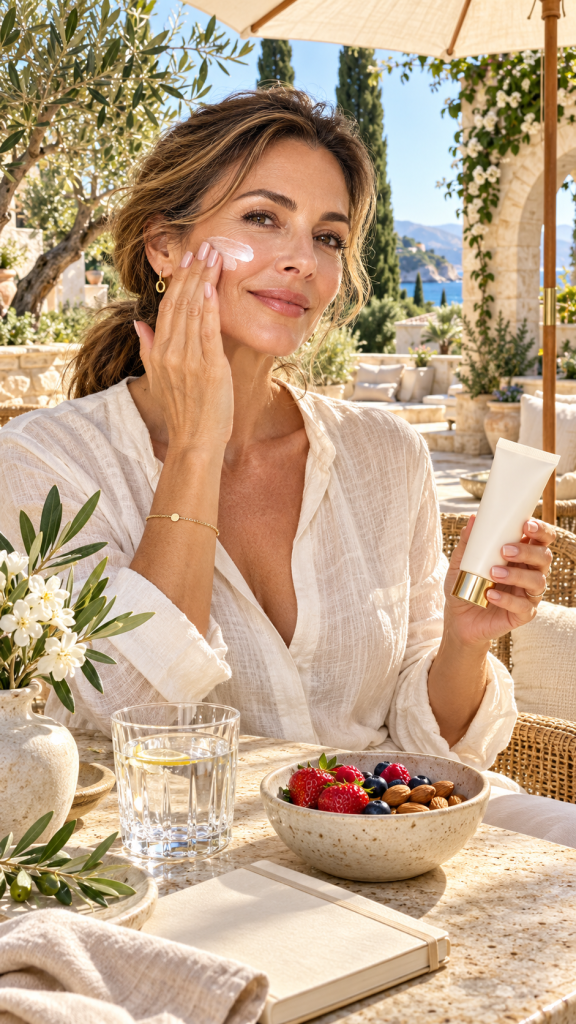
Make Broad Spectrum Sunscreen a Nonnegotiable Morning Step
A broad-spectrum sunscreen helps protect against both UVA and UVB radiation.
UVA contributes to premature skin aging, while UVB is strongly associated with sunburn. Both types can damage skin and contribute to skin cancer risk.
Choose a broad-spectrum sunscreen with SPF 30 or higher, ideally one that is water-resistant when outdoor activity or perspiration is expected.
Apply it generously to exposed skin before going outdoors, including the face, neck, ears, upper chest, and hands.
When spending time outdoors, reapply approximately every two hours and after swimming or sweating, following the product label.
Women who wear makeup can choose a sunscreen that layers comfortably underneath foundation.
A beautiful finish may encourage consistent use, but adequate application matters more than whether the sunscreen is marketed as luxurious or affordable.
☀️ Daily sun protection is one of the strongest foundations for maintaining healthier-looking skin at every age.
Protect the Neck Chest and Hands From Premature Aging
The face receives most of the attention in skincare advertising, but the neck, chest, and hands also experience visible changes with age.
These areas are frequently exposed to sunlight and may develop uneven pigmentation, fine lines, and dryness.
Extending basic skincare beyond the jawline can help maintain a more consistent appearance.
Use a gentle moisturizer on the neck and upper chest, and apply sunscreen wherever skin is exposed.
The backs of the hands also benefit from frequent moisturizing, especially after washing.
Harsh active products used on the face may not always be suitable for the thinner or more sensitive skin of the neck.
Start conservatively and prioritize comfort.
Support Your Skin Through Better Sleep and Nutrition
Topical products are only part of a comprehensive skincare routine.
Healthy habits contribute to overall skin function and appearance.
A balanced diet containing vegetables, fruit, protein, and healthy fats supplies nutrients used throughout the body, including the skin.
Adequate dietary protein supports normal tissue maintenance, while foods containing vitamin C provide a nutrient needed for collagen synthesis.
Sleep also supports general health and recovery.
Although no particular food or sleeping position can erase wrinkles, maintaining consistent healthy habits complements a sensible skincare routine.
Avoid smoking, which is associated with premature skin aging, and be mindful of excessive alcohol consumption if it affects sleep or hydration.
The objective is to support long-term skin health rather than search for a single miracle food or supplement.
Build a Routine That Works With Your Lifestyle
A skincare plan is only effective when it is realistic enough to follow.
A woman balancing a busy career, family responsibilities, and personal commitments may not have time for a twelve-step beauty routine.
Fortunately, healthy skin does not require one.
A dependable morning routine can consist of gentle cleansing, a suitable treatment serum if desired, moisturizer, and sunscreen.
Evening care can focus on removing makeup and sunscreen, applying an appropriate treatment if tolerated, and restoring moisture.
Some evenings may be devoted entirely to moisturizing.
The most important factor is maintaining a comfortable, sustainable routine and adjusting it when the skin’s needs change.
Why this strategy completes the top three: Targeted treatments can improve certain visible concerns, but ongoing sun protection and healthy daily habits help reduce avoidable damage and support results over time.
The Perfect Morning and Night Serious Skin Care for Women Over 40 Routine
An effective routine should feel manageable, not overwhelming.
The following approach combines the three essential skincare strategies into a practical daily structure that can be personalized according to skin type.
Morning Routine for Hydrated and Radiant Skin
Begin your morning by gently cleansing your face, or simply rinsing with water if that suits your skin and leaves it comfortable.
Next, consider applying a vitamin C serum if uneven pigmentation or dullness is a concern and your skin tolerates the formula.
Follow with a moisturizer containing hydrating ingredients such as glycerin, ceramides, or hyaluronic acid.
Finish with broad-spectrum SPF 30 or higher sunscreen.
The sunscreen step is essential regardless of whether you use a treatment serum.
A good morning routine should leave the skin feeling moisturized, protected, and comfortable beneath makeup or on its own.
Evening Routine for Skin Renewal and Barrier Support
Evening skincare begins with removing makeup, sunscreen, and everyday impurities using a gentle cleansing method.
After cleansing, allow the skin to dry as recommended for your chosen treatment.
On designated retinoid evenings, apply the product according to its directions, using an appropriate amount and avoiding areas the label identifies as unsuitable.
Finish with moisturizer, adjusting the order if you use a dermatologist-recommended buffering technique.
On evenings without retinoids, focus on hydration and barrier support.
This balanced approach avoids the pressure to use intensive treatments every single night.
A calm, comfortable complexion is a better sign of a well-designed routine than redness or peeling.
How to Choose the Right Serious Skin Care Products for Your Skin Type
Not every woman experiences aging in exactly the same way.
Some develop persistent dryness, while others remain oily or acne-prone well into their 40s and 50s.
Choosing products according to skin type can improve both comfort and results.
Best Skincare Approach for Dry Mature Skin
Dry mature skin typically benefits from creamy cleansers, richer moisturizers, and formulas containing humectants and barrier-supporting lipids.
Look for products featuring ceramides, glycerin, squalane, or petrolatum.
If retinol causes discomfort, reduce application frequency or consult a dermatologist about a more suitable formulation.
Avoid layering multiple exfoliating products in an attempt to create instant radiance.
Restoring moisture balance often makes dry skin appear noticeably smoother without aggressive treatments.
Best Skincare Approach for Oily or Combination Mature Skin
Oily skin can still experience dehydration and visible signs of aging.
A common mistake is using harsh cleansers to remove every trace of oil, which may leave the skin irritated without solving the underlying concern.
Choose a gentle cleanser and a lightweight, non-comedogenic moisturizer.
Niacinamide may be useful, and certain retinoids can help with acne as well as some signs of photoaging.
When breakouts persist or suddenly become severe, professional evaluation can identify suitable treatment options.
Mature skin does not have to be completely matte to look healthy and beautiful.
Best Skincare Approach for Sensitive Mature Skin
Sensitive skin requires particular care when introducing new products.
Fragrance-free moisturizers, mild cleansers, and minimal ingredient routines are sensible starting points.
Avoid trying several new serums simultaneously, since this makes it difficult to identify the cause of a reaction.
Choose one treatment based on your most important concern and introduce it gradually.
Persistent redness, burning, visible blood vessels, or frequent flushing may indicate a condition such as rosacea rather than ordinary skincare sensitivity.
A dermatologist can help distinguish these possibilities.
Common Skincare Mistakes Women Over 40 Should Avoid
A well-intentioned routine can become counterproductive when too many products compete for attention.
One frequent mistake is assuming that higher concentrations always produce faster results.
In reality, excessive retinoid use or frequent chemical exfoliation may trigger irritation that makes the skin appear dry and uneven.
Another mistake is expecting moisturizers to deliver the same effects as clinical procedures.
Moisturizers can temporarily soften fine lines caused by dryness, but they cannot eliminate deep wrinkles or significantly lift sagging skin.
Likewise, expensive packaging does not guarantee superior results.
Ingredient quality, formulation, suitability, and consistent use deserve greater attention than marketing promises.
Finally, neglecting sunscreen while investing heavily in corrective products can undermine the goals of an anti-aging routine.
Preventing additional ultraviolet damage remains essential even when using sophisticated treatments.
What Results Can Women Over 40 Realistically Expect From a Consistent Skincare Routine
One of the most empowering aspects of serious skincare is learning to set realistic expectations.
Moisturizers can improve skin comfort and hydration relatively quickly, sometimes making dehydration lines appear less noticeable soon after application.
Changes from retinoids and pigmentation-focused products usually take longer.
Depending on the ingredient, formulation, and individual response, visible improvements may develop over several weeks to months.
Deep wrinkles, pronounced sagging, and significant sun damage generally cannot be completely corrected with over-the-counter skincare.
Women seeking more substantial changes can discuss prescription treatments or professional procedures with a qualified dermatologist.
Consistency matters, but so does recognizing when a routine needs adjustment.
If a product continually causes irritation despite careful use, replacing or discontinuing it may be more beneficial than forcing the skin to tolerate it.
How to Track Progress Without Becoming Obsessed With Every Wrinkle
Skin naturally looks different depending on lighting, hydration, sleep, and environmental conditions.
For that reason, daily mirror inspections are not always a useful way to judge progress.
Instead, consider taking an occasional photograph in similar lighting and observing broader changes in texture, comfort, and tone.
Notice whether your skin feels less tight after cleansing, whether dry patches have improved, or whether a treatment is being tolerated more comfortably.
These small changes can be meaningful indicators of progress.
Healthy skin is not defined by the complete absence of lines, pores, or natural texture.
The goal is to help your skin function well and look its best at its current stage of life.
Frequently Asked Questions About Serious Skin Care for Women Over 40
What Is the Most Important Skincare Product for Women Over 40
Broad-spectrum sunscreen with SPF 30 or higher is among the most important products because it helps protect against additional ultraviolet damage.
Moisturizer is equally central for women experiencing dryness or barrier discomfort.
Once these foundations are established, targeted products can address individual concerns such as fine lines or pigmentation.
Is Retinol Necessary After Turning 40
Retinol is not mandatory, but it can be useful for women seeking improvement in certain signs of photoaging.
Some people prefer a simpler routine, while others cannot comfortably tolerate retinoids.
Pregnancy, skin sensitivity, and existing conditions also influence whether retinoids are appropriate.
A dermatologist can recommend alternatives when needed.
Can Women Over 40 Still Have Glowing Skin Naturally
Absolutely. Radiance does not depend on having perfectly smooth or wrinkle-free skin.
Good hydration, gentle cleansing, sun protection, appropriate treatment products, and healthy daily habits can help maintain a brighter-looking complexion.
A naturally luminous appearance often comes from skin that is comfortable and well cared for rather than heavily exfoliated.
How Many Skincare Products Does a Woman Over 40 Really Need
A complete routine can begin with just three core products: a gentle cleanser, a suitable moisturizer, and broad-spectrum sunscreen.
An additional treatment, such as a vitamin C product or a retinoid, can be introduced for a specific concern.
More products do not necessarily mean better results.
Should Skincare Change During Perimenopause
Perimenopause can bring changes in dryness, sensitivity, breakouts, and overall skin comfort.
If the skin becomes drier, a richer moisturizer or gentler cleanser may help.
Women experiencing persistent acne, significant irritation, or other troublesome changes may benefit from dermatologist-guided treatment.
Skincare should evolve with the skin rather than remain fixed to a routine developed years earlier.
Are Luxury Anti Aging Creams Better Than Affordable Skincare
Price alone is not a reliable indicator of effectiveness.
Affordable products can contain useful ingredients such as ceramides, glycerin, niacinamide, and retinol.
Luxury products may offer appealing textures, fragrances, or packaging, but those qualities do not automatically make them more effective.
Prioritize evidence-supported ingredients and formulations that suit your skin.
Final Thoughts on the Best 3 Serious Skin Care for Women Over 40 Secrets
Beautiful skin after 40 is not about turning back the clock. It is about understanding what your skin needs today and choosing a thoughtful routine that supports its health for years to come.
The three most valuable strategies work together: deep hydration and barrier repair, targeted treatment with appropriate active ingredients, and consistent sun protection supported by healthy daily habits.
🥇 Hydrate and protect the skin barrier to improve comfort and soften the appearance of dryness-related fine lines.
🥈 Choose targeted ingredients thoughtfully to address uneven texture, dullness, pigmentation, and some visible signs of photoaging.
🥉 Make sunscreen and healthy routines a daily priority to help prevent avoidable damage while maintaining long-term skin health.
The beauty of serious skincare is that it does not need to be excessively expensive, complicated, or time-consuming.
With gentle products, realistic expectations, and steady habits, women can embrace their 40s, 50s, and beyond with skin that looks naturally radiant and feels healthy, comfortable, and beautifully cared for.
Because the most beautiful skincare routine is not the one that promises eternal youth but the one that helps you feel confident in your skin at every age. ✨